
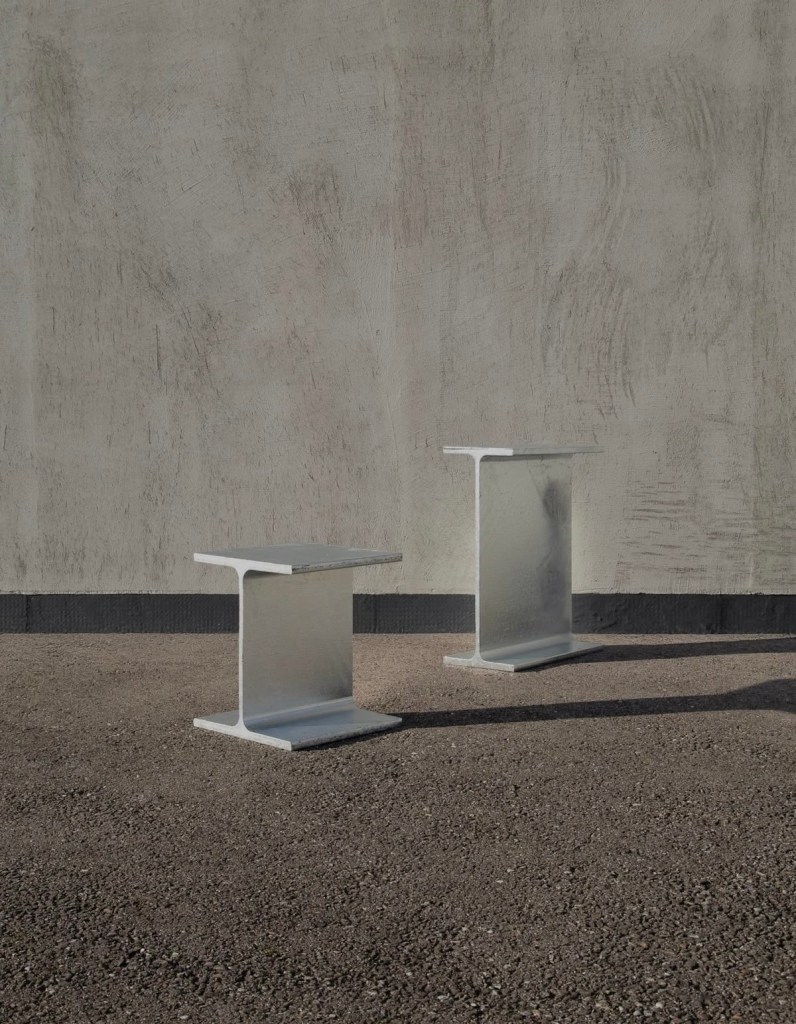
Kai Linke is a designer whose work quietly resists easy categorisation. Somewhere between sculpture, object design and architectural thinking, his pieces feel both experimental and deeply considered.
Based in Frankfurt, Linke founded Studio Kai Linke in 2009. Since then, the studio has developed projects spanning furniture, lighting, exhibition design and public installations, working with cultural institutions and international manufacturers alike.
His projects have appeared in exhibitions and permanent collections around the world, including the Museum Angewandte Kunst and the Norwegian National Museum — a reflection of how his work sits comfortably between the worlds of design and contemporary craft.
But what makes Linke particularly interesting is not just the finished objects, but the thinking behind them.
His design process is rooted in research and experimentation. Materials are not simply tools; they are collaborators. Sketches, models and physical exploration become a way of discovering what an object might become.


This approach often leads to forms that feel playful yet thoughtful. In some works, traditional craft techniques are reinterpreted through contemporary design. In others, familiar shapes are slightly altered, creating objects that feel at once recognisable and surprising.
Travel and cultural exchange also play an important role in Linke’s practice. His time in Japan, for example, inspired works such as the Kokeshi lighting collection — a contemporary interpretation of the traditional Japanese wooden dolls.
Rather than simply referencing tradition, Linke’s work asks how heritage and modern design can speak to each other.
In a recent collaboration during Vienna Design Week, he explored Alpine woodcarving traditions with craftspeople, transforming carved ornamentation into stacked sculptural forms resembling an abstract city. The project was both a tribute to craft knowledge and an exploration of how traditional techniques can evolve in contemporary design.
For viewers and makers alike, Linke’s work offers a gentle but important reminder: design does not have to choose between experimentation and craftsmanship.
In fact, that meeting point — where curiosity meets material — is often where the most compelling objects are born.
For artists building their own practices, there is something quietly inspiring here. Linke’s work suggests that inspiration does not need to come from grand ideas alone.

In fact, that meeting point — where curiosity meets material — is often where the most compelling objects are born.
For artists building their own practices, there is something quietly inspiring here. Linke’s work suggests that inspiration does not need to come from grand ideas alone. Sometimes it begins with a material in your hands, a fragment of craft history, or something unexpected discovered at a flea market.
From there, the object slowly reveals itself.
Leave a Reply